Content marketing has never been bigger, and it has never been easier to get lost in. AI can now spin up an endless supply of passable content in seconds, which means the bar for being worth someone’s attention has shot up. The brands that win in 2026 are not the ones making the most content. They are the ones making content people actually choose. Here is where content marketing is genuinely heading this year, what the UK and US data says, and what we think you should do about it.
Content marketing is bigger than ever
Start with the money, because it tells the real story. Content marketing now accounts for roughly 26% of total marketing budgets in 2026, and global content marketing revenue is projected to pass 107 billion dollars, up from 36.8 billion in 2018 (industry projections, 2026). This is no longer a “nice to have” line item. It is a core channel with real money behind it.
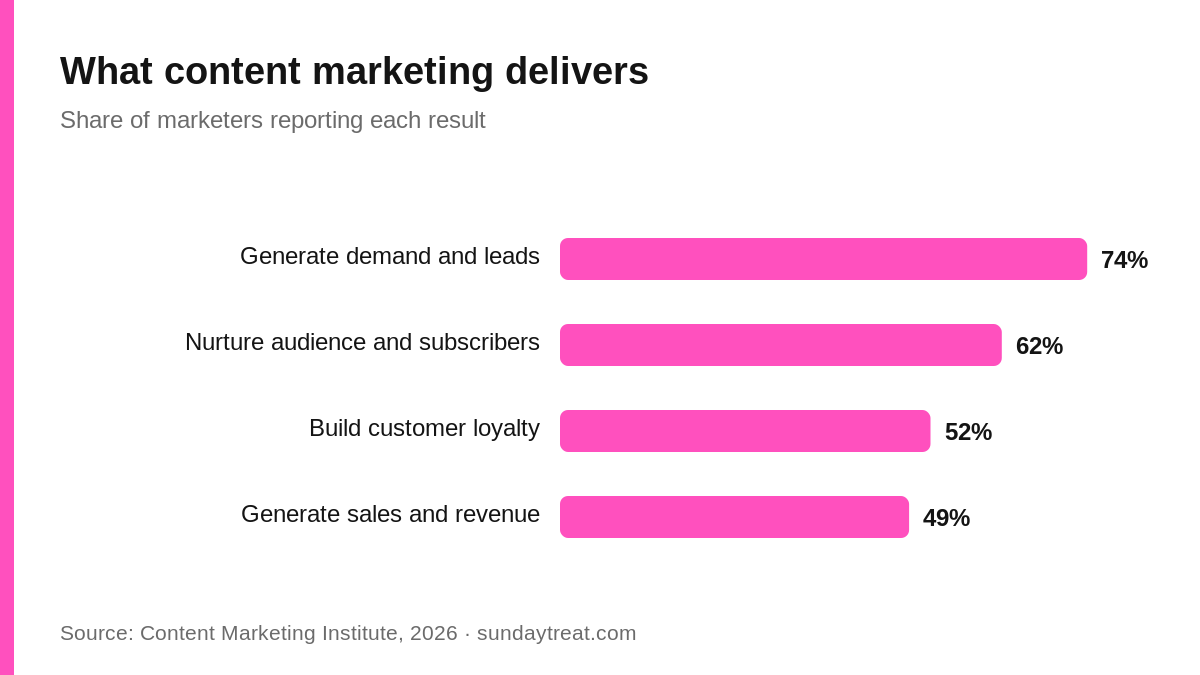
It is also doing a job. Marketers say content marketing has helped them generate demand and leads (74%), nurture their audience (62%), build customer loyalty (52%) and drive sales and revenue (49%) (Content Marketing Institute, 2026). In B2B specifically, 91% of marketers use content marketing, and 76% say it generates demand and leads, up nine points on the year before.
One number cuts through the rest. Teams with a documented content strategy report around three times more leads per pound spent than teams winging it, and roughly 73% of B2B and 70% of B2C marketers now have one written down (industry research, 2026). The lesson is old but it keeps being true: a plan beats more posts.
The real problem in 2026 is “more”
Here is the tension that defines the year. The cost of producing average content has effectively fallen to zero. Anyone can generate a blog post, a caption or a passable video in seconds, so the web is filling up faster than ever. That sounds like a win until you remember the one thing that has not scaled: human attention.
So the game has flipped. When everyone can make more, “more” stops being an advantage and starts being noise. The brands that stand out in 2026 are not winning on volume. They are winning on judgement, taste and a point of view that a machine cannot copy. Every trend below is really a version of that same shift.
AI is now table stakes
The argument about whether to use AI in content is over. 49% of marketers now use AI to create personalised content, the single most widely adopted tactic this year, and 91% of those who personalise say it improves engagement (HubSpot, 2026). When marketers are asked where their new budget is going in 2026, AI tools top the list at 45%, ahead of events at 33% and owned media at 32%.
So the edge in 2026 is no longer whether you use AI, but how well. Everyone has the same tools. The brands that win use them to move faster on the boring parts, the first drafts, the reformatting, the dozen variations for testing, and then spend the time they save on the bits a machine cannot do. Used well, AI is the best junior in the building. Used lazily, it is a very fast way to publish forgettable work.
The human premium
Here is the shift that matters most. More content is now produced by AI than by humans, and yet audiences are actively seeking out human-made content (HubSpot, 2026). In a feed of AI-generated perfection, raw, human, slightly imperfect content reads as trustworthy, which is why employee-generated content and founder-led video are starting to outperform glossy, anonymous brand posts.
That is the opportunity. As the cost of average content falls to zero, the value of genuinely human, well-made, brand-specific content goes up. The premium is on the things AI cannot fake: a real point of view, real people, real expertise, and real production craft. That is not nostalgia, it is economics. Scarcity sets the price, and human is now the scarce part.
AI is getting incredibly good, and I would be lying if I said it was not useful. But you have to use it to support what you are doing, not replace it. The moment the work is obviously AI, people switch off.
 Gulliver Moore
Co-Founder, Sunday Treat
Own your audience, stop renting it
If there is one strategic move that defines 2026, it is the shift from rented reach to owned audiences. The ground under paid and social has moved: third-party cookies are effectively gone, and roughly 72% of marketers are rebuilding their data strategy around privacy-first, first-party data, with 62% saying first-party data will only get more important over the next two years (industry research, 2026). That is why owned media is one of the top three places marketers are adding budget this year.
In plain terms: an algorithm can switch off your reach overnight, but it cannot touch your email list, your community or your own channels. The brands building real assets in 2026 are turning every campaign moment into a reason to capture an owned relationship, a newsletter sign-up, a community membership, a logged-in user. Reach you rent disappears the day the platform changes its mind. Reach you own compounds.
The practical version: treat every piece of content as a path to an owned audience, not just a view. A great video that earns a newsletter subscriber is worth far more in 2026 than a viral one that earns nothing you can contact again.
Community is becoming a content engine
Closely related, and often missed, is community. The smartest content programmes in 2026 are not one-way broadcasts. They are two-way, with comments, forums, user questions, reviews and member contributions feeding the content itself. Community is not just a distribution channel, it is a content creation engine: it generates ideas, supplies social proof, sharpens your message and creates word-of-mouth no ad budget can buy.
For most brands this does not mean building a forum from scratch. It means actually engaging where your audience already gathers, listening to the language they use, and turning their real questions into your next pieces. The brands that feel alive in 2026 are the ones where the audience is part of the work, not just the target of it.
Brand-led beats performance-only
After a decade of everything being measured against last-click ROI, the pendulum is swinging back towards brand. 47% of marketers say they are prioritising content that reflects their brand’s values in 2026 (HubSpot, 2026). That is not a soft, fluffy choice. It is a hard-nosed one.
It is not brand versus performance, it is brand feeding performance. The brands that build genuine equity convert their paid spend harder, because people already know and trust them by the time the ad shows up. Distinctive, consistent, human brand content lowers your cost of everything downstream. This is exactly what our creative strategy and performance marketing teams pair up to do: build the brand and make the numbers work, not one at the expense of the other.
Search is splitting: Google and AI answers
The way people find content is changing faster than anything else on this list. More than 60% of Google searches now end without a click, with the answer served straight on the results page, and that share has been climbing sharply since AI Overviews rolled out (SparkToro; industry research, 2026). At the same time a growing slice of questions never touches Google at all, going straight to ChatGPT, Perplexity and other assistants.
This is why generative engine optimisation, getting your brand cited inside AI answers, is the new frontier alongside classic SEO. The early data is striking: while around 92% of marketers say they plan to optimise for AI search, only about 40% actually are, and just 14% track whether they are being cited at all (GEO industry research, 2026). The gap between intent and action is the opportunity.
The hard truth: if you are not in the AI answer, you are invisible to a fast-growing share of buyers. Getting pulled in comes from the same things that make content good for humans, original data, a genuine point of view, clear structure a machine can quote, and credible expertise behind it. Optimise for being the source, not just the result.
Video keeps eating content
If there is one format the data keeps crowning, it is video. 93% of marketers say video is an important part of their strategy, and 52% are shifting spend towards video and multimedia in 2026 (HubSpot, 2026; Wyzowl, 2026). We pulled the full picture together in our video marketing statistics for 2026, but the direction is clear: content strategies are becoming video strategies.
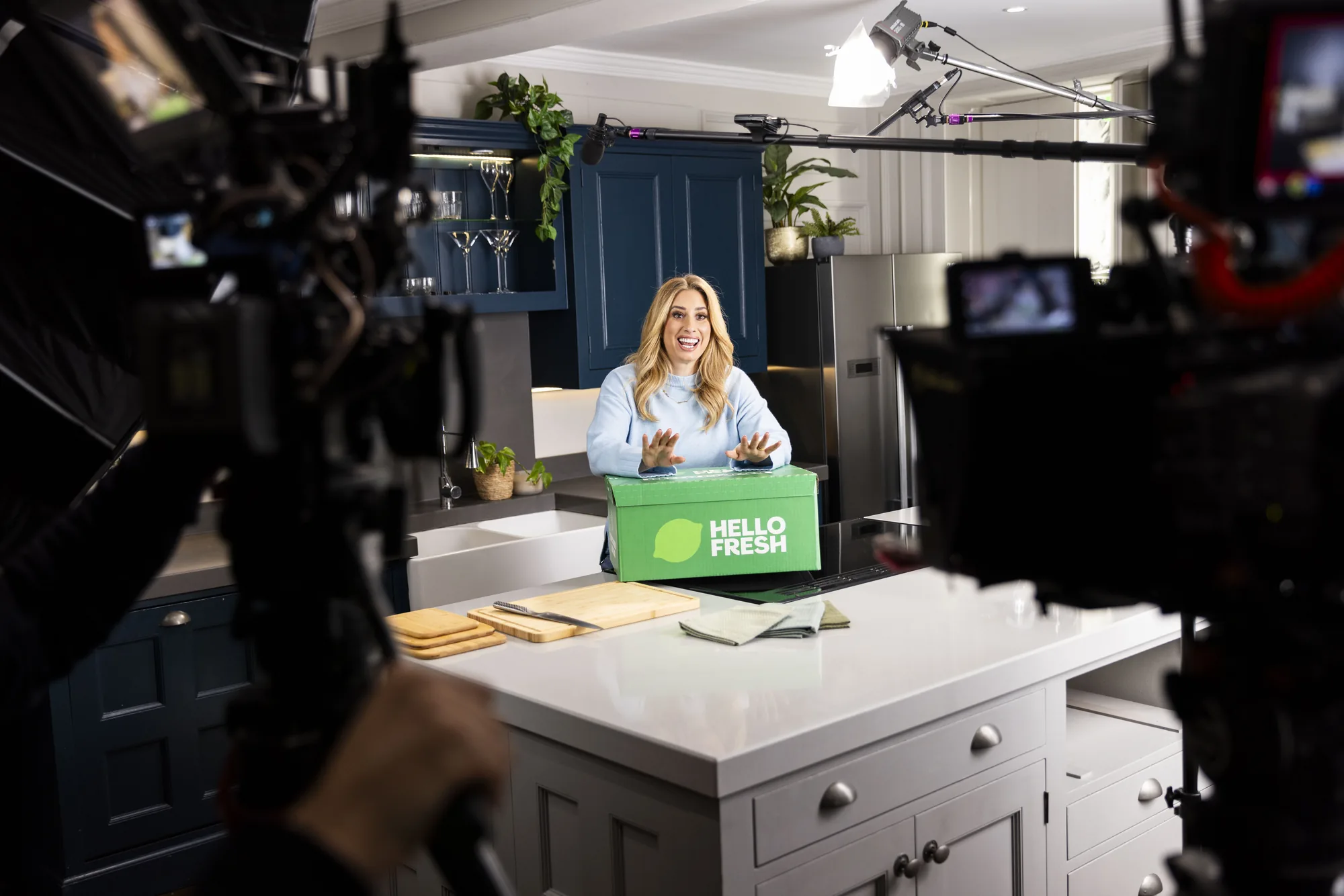
The same human-premium logic applies here too. As AI makes generic video cheaper, the demand for video with a real idea, real people and real craft goes up, not down. We dug into exactly where AI helps and where it falls short in our piece on the future of AI in animation. Our content production and video production teams are built for this shift.
Distribution beats creation
One of the quiet shifts of 2026 is where the effort goes. For years brands poured almost everything into making content and almost nothing into spreading it. That maths no longer works. When the feed is infinite and average content is free, a brilliant piece nobody sees is worth exactly nothing. The teams getting results now make fewer, better things and put real effort into distribution: repurposing one strong idea into ten platform-native cuts, seeding it through their owned channels, their people and their community, and giving it more than a single day to live.
A simple rule we like: spend as much time getting a piece seen as you spent making it. The idea is the hard part, but distribution is where most good work quietly dies. Plan it before you publish, not after.
Measure what actually matters
As content moves to owned audiences and AI answers, the old scoreboard breaks. Page views and last-click attribution miss most of the value created by brand-led, multi-channel content. In 2026 the teams getting bigger budgets are the ones tying content to outcomes the business cares about: pipeline influenced, owned-audience growth, branded search, and assisted conversions, not just traffic. If you cannot show what content did, you will lose the argument for funding it, no matter how good the work is.
The 2026 content playbook
If you want the honest, practical version of all this, here is what we would tell any brand for 2026. Use AI to scale the parts that do not need a human, then reinvest every hour you save into a real point of view and real production value. Build owned audiences relentlessly, because a newsletter or community no algorithm can switch off is the most valuable thing you can make. Lead with brand, because it makes every pound of performance spend work harder. Structure your best content to be quoted by AI answers, not just ranked by Google. Bet on video, and make it human. And measure the things that move the business, so the work survives the next budget review.
None of that requires chasing every shiny trend. It requires picking the few that matter and doing them properly. That is the whole job.
What this means for brands in 2026
Here is our honest read. Two forces are pulling content marketing in opposite directions: AI is flooding the web with cheap content, and audiences are responding by trusting human, brand-led, well-made content more. The brands that win in 2026 will sit firmly on the right side of that split.
In practice that means using AI to scale the parts that do not need a human, then spending the saved time on a real point of view and real production value. It means building owned audiences that no algorithm can switch off. It means getting your brand into AI answers, not just Google. And it means leading with brand, because that is what makes everything downstream work harder. The tools changed. The job, making something people actually want to watch and remember, did not. We will, as ever, find the fun in it.
Want content that gets chosen?
We are a London video and content agency, and a winner at The Drum Awards. Let’s make something worth watching.
Get In Touch