AI can now generate animation. That genie is not going back in the bottle, and honestly we would not want it to. The more useful question is not whether AI belongs in animation, it is what it is genuinely good at, where it falls flat, who actually owns the output, and how the best studios are already putting it to work. Here is an honest look at the state of AI in animation in 2026, with the numbers to back it up.
AI in animation is moving fast
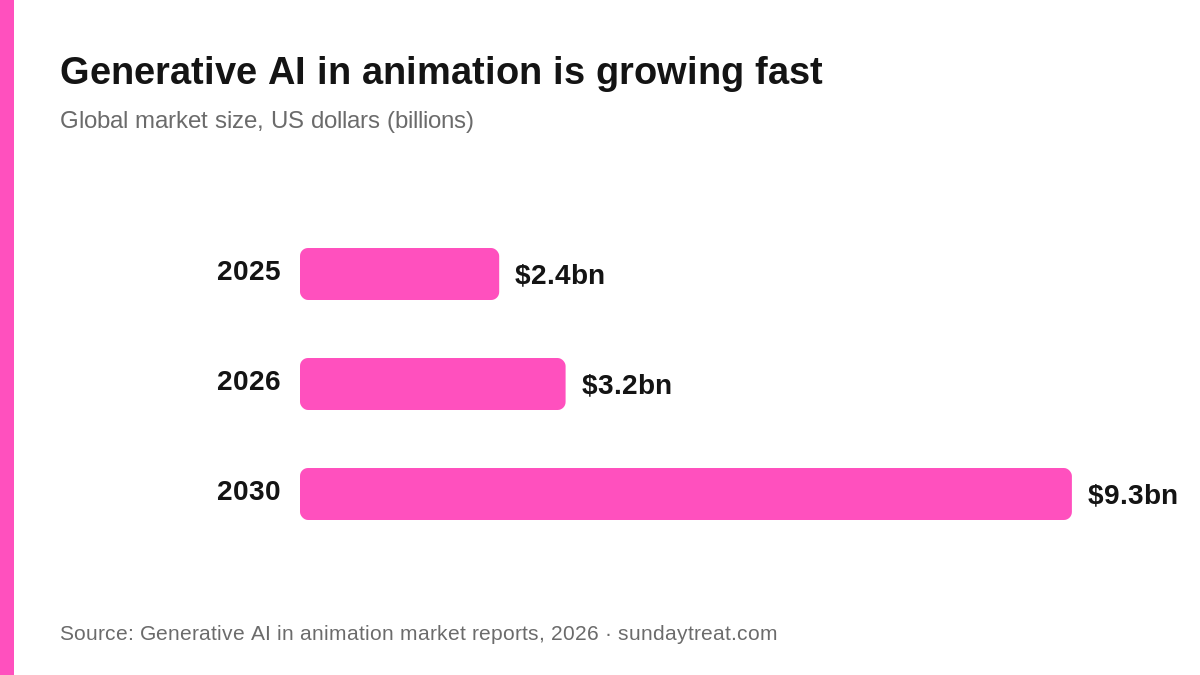
Start with the money, because it cuts through the noise. The generative AI in animation market is worth roughly 3.2 billion dollars in 2026, up from about 2.4 billion in 2025, and it is growing at around 36% a year (Grand View Research; market.us, 2026). On current projections it passes 9 billion dollars by 2030.
Zoom out to AI video more broadly and the curve is steeper still. The global AI video generation market is on track to reach roughly 18.6 billion dollars by the end of 2026 (industry estimates, 2026). Whatever your view of the output, the investment is real and it is accelerating, in the UK and US alike.
The tools that changed the game
The reason this stopped being a novelty is that the tools grew up fast through 2025 and 2026. A handful are worth knowing by name. Runway’s suite added Aleph for editing inside an existing shot and Act-Two, a motion-capture feature that lets one person with a webcam drive an animated character, work that used to need a stage and a team. Google’s Veo generates synchronised audio, dialogue, ambient sound and effects, in the same pass as the picture, and outputs true 4K. Tools like Kling now hold character and scene consistency across clips long enough to be useful in a real edit.
The pace is the point. Capabilities that were research demos eighteen months ago are now buttons in a creative suite. That is exactly why a clear-eyed view of what these tools are for, and what they are not, matters more than ever.
What AI can actually do in animation right now
Strip away the demos and the doom, and a clear picture emerges. AI is brilliant at the repetitive, time-eating middle of the pipeline, the parts that have always eaten budget without adding much magic.
In practice that means rapid concepting and storyboards, previs and animatics, in-betweening and clean-up, rotoscoping and rotomation, style transfer, background and environment generation, upscaling older footage, and frame interpolation for smoother motion. It is also genuinely strong at B-roll and at lip-synced dubbing, so a single film can ship in several languages without reshooting, which matters a lot for brands selling across the UK, US and beyond.
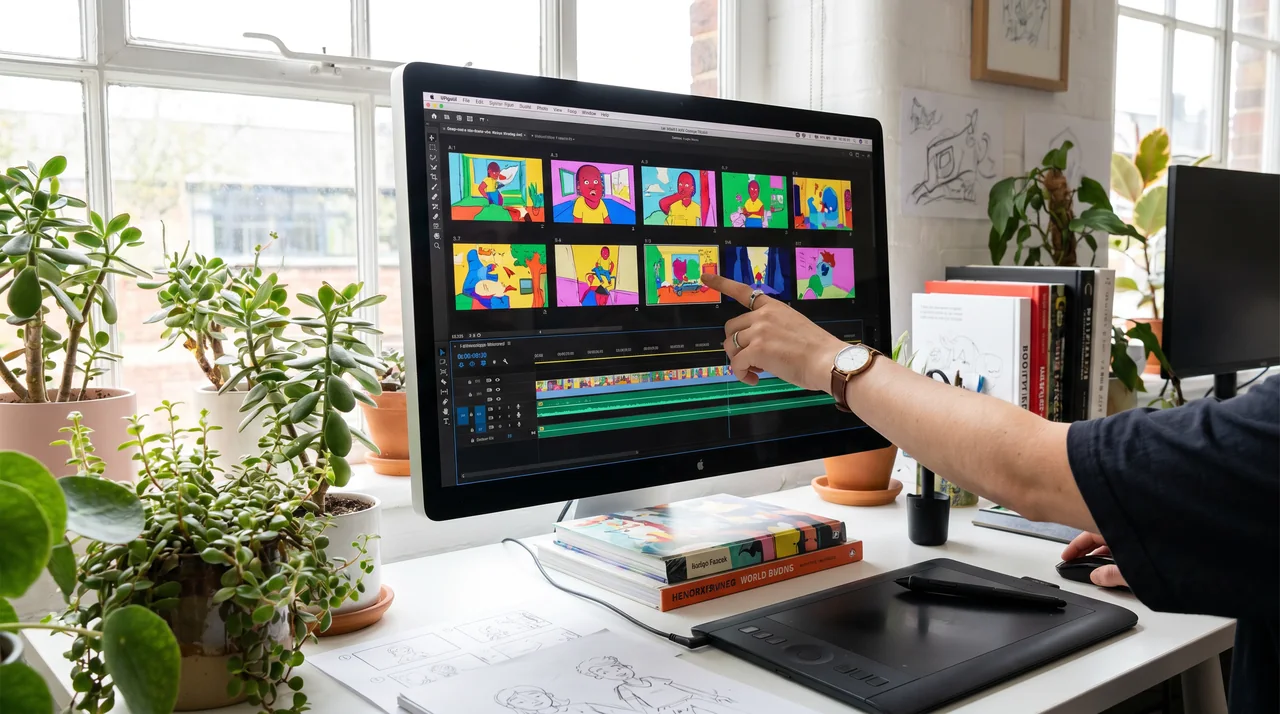
The honest summary: AI is a power tool, not a director. It is fast, tireless and very good at the grunt work. It is the table saw, not the carpenter. Most growing brands in 2026 are not choosing AI or a studio, they are using a mix: AI for speed and volume, people for the work that carries the brand.
What it still cannot do
Here is where the hype meets reality. AI is weakest at exactly the things that make animation worth watching. A coherent story with a real structure. Characters that stay consistent and believable from shot to shot, scene after scene. Comic and emotional timing, the difference between a joke that lands and one that dies. Art direction and a point of view that holds across a whole film. And the brand-specific craft that makes work feel like it belongs to you and no one else.
Illustrative, character-based animation is a different skill level entirely. You have to think about how physics interacts with the world, how characters and bodies actually move.
 Gulliver Moore
Co-Founder, Sunday Treat
Anyone can now generate a clip. Almost no one can generate a film that makes you feel something. That gap is the whole game, and it is not closing nearly as fast as the headlines suggest. The tools are getting better at pixels. They are not getting better at ideas.
The tells: how to spot AI animation
If you want to understand the limits, learn the tells. Right now AI animation gives itself away in predictable ways: hands and fingers that quietly change between frames, faces that drift out of likeness across a sequence, physics that looks almost right but floats, textures that shimmer or morph when they should stay still, and edits with no real sense of pace because nothing is actually being directed. Individually these are small. Together they read as “off,” and audiences feel it even when they cannot name it.
Most of these are consistency problems, and consistency over time is the hardest thing for these models to hold. It is also exactly what a film needs. A two-second demo can hide the cracks. A ninety-second brand piece cannot.
Studios are adopting it, carefully
This is not a fringe experiment. More than 60% of animation studios are exploring or already using generative AI in their pipelines, and they report cutting production time and cost by around 30% on the specific tasks where it fits (industry surveys, 2026). More than 75% of animation professionals expect AI to have a significant impact on the craft within five years.
The pattern underneath those numbers is telling. Studios are not handing whole films to AI. They are slotting it into specific, unglamorous stages and protecting the creative ones. That is the adoption curve of a useful tool, not a replacement.
A bigger tool has never automatically made the work better. A 3D shoot does not make a film three times better, and AI will not make it good on its own either. The tools have never been more powerful. The ideas are still the hard part, and they always will be.
Gulliver MooreCo-Founder, Sunday Treat
The cost reality
The honest reason everyone is paying attention is cost. On the tasks it suits, AI can collapse the time and money a job used to take, which is why studios report roughly 30% savings where they apply it, and why simple, high-volume work is getting dramatically cheaper. That is a genuine win, and pretending otherwise helps no one.
But cost has two sides. The price of making something average is falling towards zero, which means average no longer buys you anything. When everyone can produce passable animation cheaply, the only work that stands out is the work that is actually good, and good still costs what good has always cost: time, talent and judgement. Cheaper production raises the bar, it does not lower it.
Can you even own AI animation?
This is the question most brands skip, and it is the one that can bite hardest. In the US, the Copyright Office and the courts have held that work with no human author cannot be copyrighted, a position left standing when the Supreme Court declined to take up an AI-art appeal in early 2026. In plain terms: if a clip is purely machine-generated, you may not be able to protect it as your own. For a throwaway social post that may not matter. For a brand asset you want to own and defend, it matters a lot.
Then there is the training-data question. Most generative models learned from existing work, which has triggered real legal fights, Disney and Universal sued Midjourney in 2025, and more than 6,500 artists signed a public letter calling unlicensed training “mass theft.” At the same time, the licensed path is taking shape: Disney’s billion-dollar deal to license its characters into a major AI video tool shows where the legitimate version of this is heading.
The practical version: keep a real human in the creative loop, document it, and lean on licensed or properly cleared tools. That protects both your copyright position and your brand’s reputation.
Rights, ethics and trust
Audiences care too, not just lawyers. When something is obviously machine-made with no human fingerprint on it, trust drops and attention follows. Our take is simple. Use AI where it genuinely helps, be honest about where you have used it, keep consent and licensing clean, and never let it strip the human signature out of the work. The brands that get this wrong will save a little money and quietly lose something far more expensive.
What brands should actually commission
So where does that leave you if you are paying for animation in 2026? Be clear-eyed about the split. For high-volume, low-stakes work, social cut-downs, simple motion graphics, quick variations and localised versions, AI will rightly bring the cost down, and you should take that saving. For the work that has to carry your brand, a hero film, a signature explainer, a campaign centrepiece, you still want a real idea, real direction and a human hand on the craft.
The smart brief in 2026 is not “AI or studio.” It is “use AI to make the budget go further on the repetitive parts, and put the saving into making the important parts genuinely good.” That is the conversation we have with clients on almost every animation and video production project now.
And the people who make it
It would be dishonest to write all this and skip the human cost. The arrival of AI has genuinely unsettled animators and illustrators, and the concern is not paranoia: more than 6,500 artists signed a public letter objecting to their work being used to train these models without consent. That tension is real and it is not resolved.
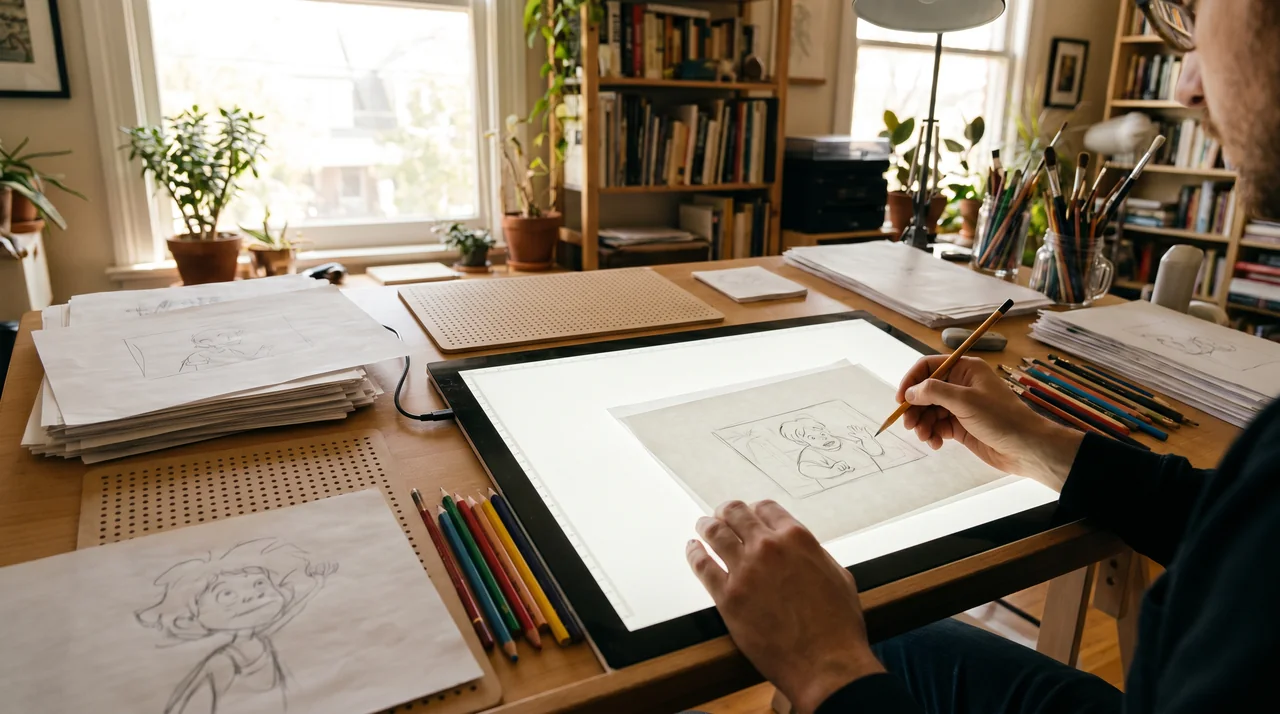
Our position, for what it is worth, is that the answer is not to ban the tools or to pretend the people are now optional. It is to use AI to remove the drudgery and keep paying humans for the thing only they can do: have the idea, set the taste, and make it mean something. The studios that treat their people as the point, and the tools as leverage, are the ones we would bet on.
What the future actually looks like
Forget the two extremes, that AI replaces everyone, or that it is a passing fad. The realistic future is a hybrid pipeline. AI takes the grunt work, the in-betweens, the rotoscoping, the eighth version of a background, and hands the time back to the people. Animators, directors and writers spend that time on the parts that actually move an audience: the idea, the performance, the timing, the craft.
The studios that win will not be the ones that use the most AI, or the least. They will be the ones that know exactly which jobs to hand to the machine and which to protect. The tools will keep getting better at execution. The advantage will keep moving to the people with the best ideas and the taste to direct the machine well.
What this means for brands in 2026
If you are commissioning animation, here is the practical read. AI will, rightly, bring down the cost of certain jobs, and you should expect that. But do not confuse cheaper with better. The work that builds a brand still needs a real idea and real direction, and that is exactly what AI cannot fake. Spend the savings on the thinking, not just the volume, and keep your ownership and your audience’s trust intact while you do it.
It is the same shift we wrote about in the future of content marketing, and it rhymes with what the video marketing statistics for 2026 keep showing: as average content gets cheaper, genuinely good, human, brand-specific work gets more valuable, not less. The tools changed. The job, making something people actually want to watch and remember, did not. And we will, as ever, find the fun in it.
Thinking about animation that works?
We are a London video and animation agency, and a winner at The Drum Awards. Let’s make something worth watching.
Get In Touch