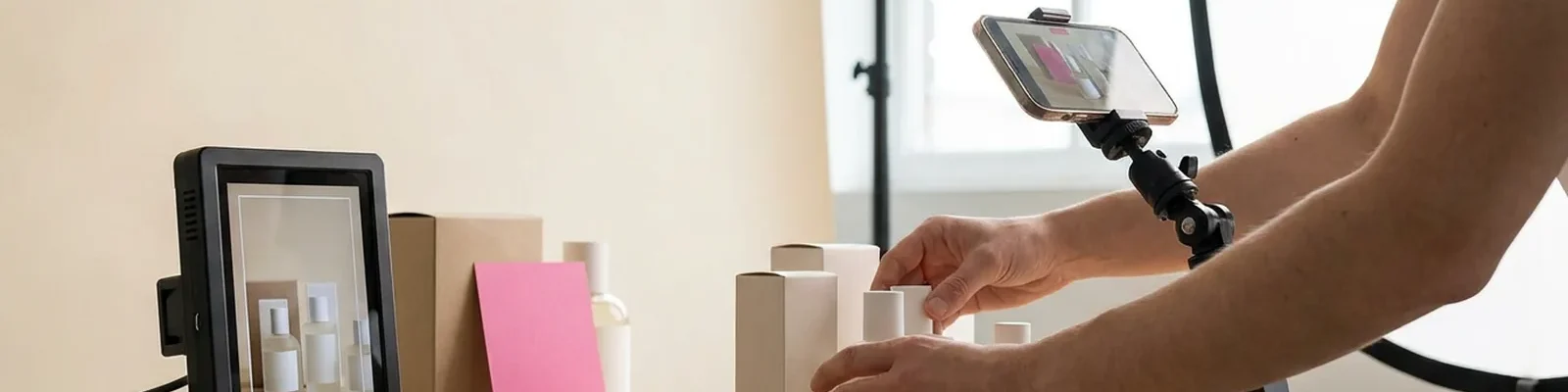
Ecommerce has one structural problem it has never solved: nobody can touch the product. Every conversion tactic in the industry, from reviews to free returns, is really a workaround for that missing moment of holding the thing in your hands. Video is the closest fix the internet has, which is why ecommerce video marketing has quietly become the highest-yield work in online retail: it shows scale, texture, movement and honesty in a way no gallery of still images can. This is what actually converts in 2026, from product page video and shoppable formats to the UGC loop that turns customers into your ad department.
Why video converts where images stall
Video closes the two gaps that kill ecommerce conversion: information and trust. The information gap is obvious, a 30-second clip answers questions a product page never anticipated (how big is it really, how does the fabric fall, how fiddly is assembly). The trust gap is the deeper one, and shoppers are explicit about it: 84% of consumers say they have been convinced to buy after watching a brand’s video, and 46% now name short-form video their preferred format for discovering and evaluating products (Bazaarvoice, Video Commerce 2025).
Notice what that second number means. Nearly half of shoppers would rather watch a TikTok-shaped answer than read your carefully written description. The conversion rate video drives is not a bonus on top of your product page. Increasingly, video is the product page, and the words are the footnote.
Product page video: the highest-intent screen you own
Start where the money already is. A visitor on a product detail page has done the hard part, they arrived with intent, and video’s job there is simply to remove the last doubts. The product video ecommerce brands get right shares a formula: 15 to 45 seconds, product in real use within the first three, honest scale reference (hands, body, room), silent-friendly with captions, and shot to answer the questions your returns data says people get wrong.
Two upgrades multiply the effect. First, add customer-shot clips beside the polished one: as we covered in our guide to user-generated content, product pages featuring real customer content convert dramatically harder, because a stranger’s kitchen is more persuasive than your studio. Second, treat PDP video as a testing surface like any other: measure add-to-cart rate with and without, per category, rather than assuming. The lift is usually there, but knowing its size tells you how much production the category deserves.
What to shoot depends on what the category makes people nervous about. Apparel converts on movement: fabric walking, sitting, stretching, on more than one body shape. Furniture and homeware convert on scale and assembly, the two things photos lie about most. Beauty converts on application and honest texture, ideally with a before and after that has not been flattered into fiction. Food and drink convert on the moment of consumption, the pour, the bite, the fizz. In every case, the brief writes itself if you start from your returns reasons and your customer-service inbox: film the answers to the questions people regret not asking.
Social commerce: the feed is now a shop
The other half of ecommerce video happens before anyone reaches your site, in feeds that have quietly grown checkouts. US social commerce sales pass $100 billion for the first time in 2026, reaching $100.99 billion, up 18% year on year (eMarketer, 2026). TikTok Shop alone is forecast to hit $23.41 billion in US sales in 2026, up 48%, after growing 108% to $15.82 billion in 2025 (eMarketer, 2026). Over half of US social buyers are expected to shop on TikTok this year.
For UK brands this is not a distant American trend: UK 18 to 34s already spend 49 minutes a day on TikTok (Ofcom, 2025), and the browsing-to-buying pipeline is the same. The strategic point is that social commerce collapses the funnel. Discovery, evaluation and checkout now happen inside one video, one creator, one swipe, which means the video has to do jobs your website used to do.
Shoppable video: shortening the distance between watching and wanting
Shoppable video is any video a viewer can buy from without leaving it: tagged products on TikTok and Instagram, live shopping streams, and on-site video carousels with baked-in add-to-cart. Its entire value is friction removal. Every screen between “I want that” and “paid” leaks buyers, and shoppable formats delete most of those screens.
Our honest advice is to sequence it. Get PDP video and organic short-form working first, because shoppable formats amplify demand that video has already created, they rarely create it from nothing. Then start with your proven sellers: the products people already buy on impulse are the ones that suit a tap-to-buy moment. And if you sell to under-35s, treat TikTok Shop as a real sales channel with its own content plan rather than a checkbox, because that is what the numbers above say it has become.
Getting started is more operational than creative. On TikTok and Instagram it means setting up the shop, syncing the catalogue and tagging products in both your own posts and your creators’ (with a commission structure that makes creators care). On your own site it means a video player that carries add-to-cart, so the PDP clip and the buy button stop being separate experiences. Live shopping sits at the ambitious end, part demo, part entertainment, part flash sale, and it rewards brands with a confident on-camera person and a genuinely limited offer. None of it requires new creative from scratch. It requires wiring the video you already have to a checkout.
The UGC loop: your best ads are already being filmed
Here is the engine that powers the best-performing ecommerce accounts we see: a loop, not a campaign. Source authentic customer and creator clips continuously. Post them organically and watch what holds attention. Then, and only then, put media spend behind the proven ones. UGC for ecommerce is uniquely suited to this because the supply is endless and the format is native to every feed the buyer scrolls.
We’ve got a really good philosophy where we don’t recommend ad spends unless the clip, the video asset or any asset, has already proven itself organically.
 Gulliver Moore
Co-Founder, Sunday Treat
That rule exists because paid distribution is an amplifier, and amplifying an unproven ad is how ecommerce brands quietly burn a quarter’s budget. The feed will tell you which clip deserves money, for free, within days. Let it. (The sourcing, rights and briefing mechanics that keep the loop fed are a subject of their own, and our UGC guide covers them properly.)
Two operational details make the loop scale. Rights first: secure written usage permission before a clip goes anywhere near your ad account, because the best-performing video in your library is worthless if you cannot legally promote it. Then run winners through the creators’ own handles where the platforms allow it, TikTok’s Spark Ads being the obvious example, so the ad carries the creator’s name and native credibility rather than suddenly becoming “brand content”. The same clip, boosted from the original account, routinely feels less like an interruption, which is the entire trick of this format.

Video ads for ecommerce: families, not hero films
When a clip earns its media spend, the work is not finished, it multiplies. The video ads ecommerce accounts scale with are families of variants: the same winning idea re-hooked, re-cut and re-cast per audience, placement and product line. Creative fatigues fast at retail spend levels, so the pipeline of fresh versions matters more than any single ad. Speed is a genuine advantage here, and it is buildable: when Asda needed reactive campaign content, we produced 16 assets in 10 days for “Pop the Bublé”, the kind of tempo that keeps ad accounts fed without heroics.
Versioning for retail has its own flavour because the product range does half the work for you. The same winning structure can be re-run per colourway, per bundle, per season and per objection: one variant opens on price for the discount-motivated, another on quality for the sceptical, another on speed of delivery for the last-minute buyer. Retail calendars add urgency for free, so plan re-skins for the moments that matter to your category rather than rebuilding creative from zero each time. The winners keep earning as long as you keep dressing them for the occasion.
The craft side of why most product ads underdeliver (hooks, versioning, testing cadence) is its own discipline, and paid platforms have their own grammar, which our TikTok advertising guide unpacks for the platform where ecommerce creative currently works hardest. The short version: make content, not adverts, and let performance marketing scale what the audience has already endorsed.
Want ecommerce video that pays for itself?
We are a London video and content agency, and a winner at The Drum Awards. We build the content engine and run the paid loop behind it, from PDP to TikTok Shop.
Get In TouchThe production engine: volume without the burnout
Everything above assumes a steady supply of video, and that frightens teams who price content one film at a time. The fix is batching. One well-planned production day, designed around families of assets, can feed a month of PDP clips, organic posts and ad variants: multiple products, multiple angles, multiple hooks, shot back to back. A campaign we ran with Lipton generated 149 million impressions, and the material behind that kind of reach comes from exactly this system, planned volume rather than one precious film. It is the difference between a content production engine and a succession of expensive one-offs.
A useful planning ratio for ecommerce: for every polished brand asset, plan several native, lo-fi, creator-style pieces. The polished work sets the standard and dresses the PDP. The scrappy work does the daily selling. Both matter, and 91% of businesses now using video as a marketing tool (Wyzowl, 2026) are discovering the mix is the strategy.
The ecommerce video marketing playbook
Measure each placement on its own job. PDP video answers to add-to-cart and conversion rate, tested per category. Organic social answers to watch time and saves, your early-warning system for what deserves spend. Paid answers to cost per acquisition and return on ad spend, judged over weeks rather than days. And the loop answers to one blended question: is video making the whole shop convert better this quarter than last?
Then run the sequence: fix the product pages first, build the organic short-form habit second, switch on the UGC loop third, scale winners with paid fourth, and add shoppable formats once demand is real. That order front-loads the cheap wins and lets evidence, not optimism, unlock each stage of budget. It is not complicated, but it is a system, and systems are what separate the brands compounding at 18% social-commerce growth from the ones posting a product video and hoping. If you would like the system built for you, with the fun kept firmly in it, you know where to find us.
